Catermat Cars
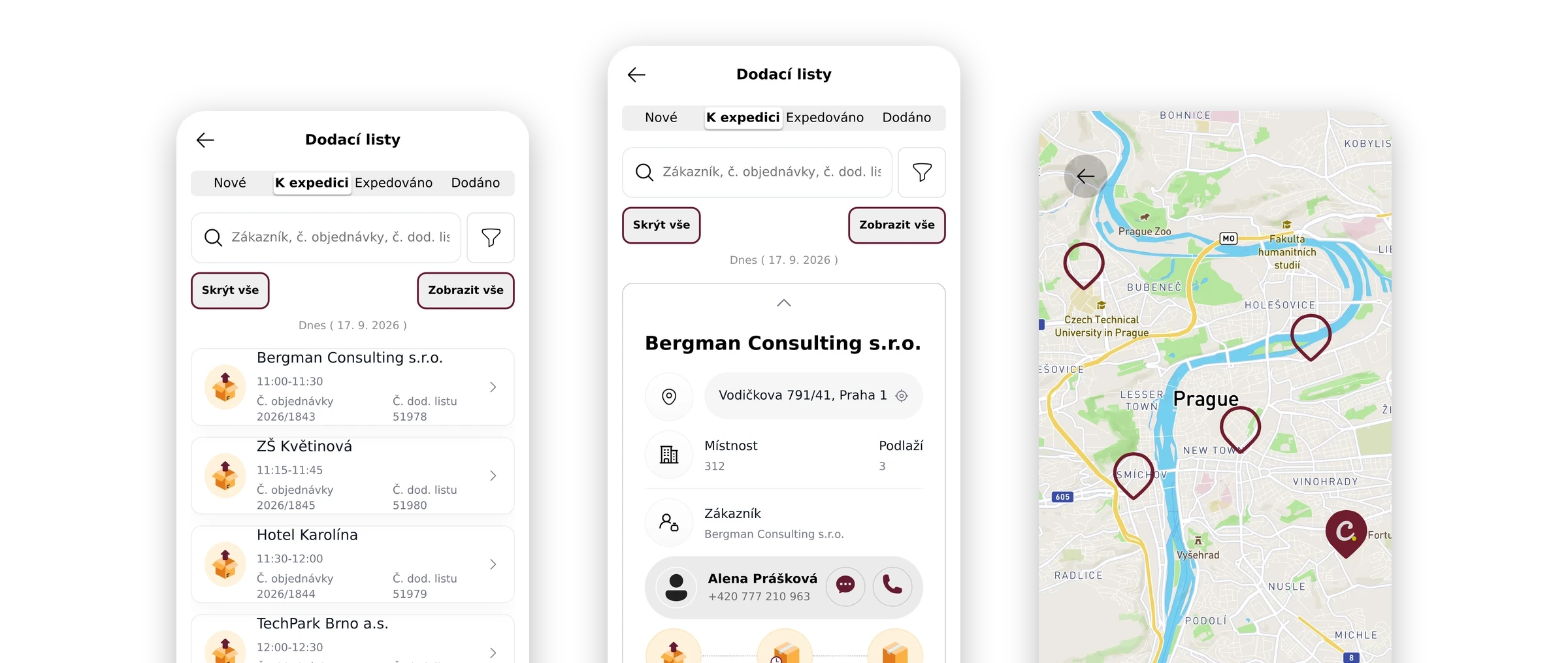
A delivery app for catering. Delivery notes without paper, signed with a finger.

- Industry
- Gastronomy and catering
- Scope
- Design, iOS + Android app, backend
- Timeline
- 2024 to 2025
- Stack
- Capacitor, Vue 3, Symfony
The brief
Office catering means dozens of deliveries across Prague every morning, and a paper delivery note with each of them. Paper gets printed, lost and retyped, dispatch phones the drivers to ask where they are, and confirmed handovers return to the system days later.
We had already built the website for Catermat; now it was the deliveries’ turn. The brief: connect the vans to the Ordermat company system, so orders land in the drivers’ phones, pass through clear states and the handover is confirmed on the spot.
We built a hybrid app for iOS and Android. Orders flow from the company system into the phone and pass through the states New, To dispatch, Dispatched and Delivered; the production and delivery roles each see their own steps. At handover the customer signs with a finger on the display, and the signature is stored with the delivery note along with the location.
The delivery run: from dispatch to signature
A driver’s whole day in one loop: signing in, delivery notes by state, dispatching an order and finally the recipient’s signature drawn with a finger on the display. No paper anywhere on the route.
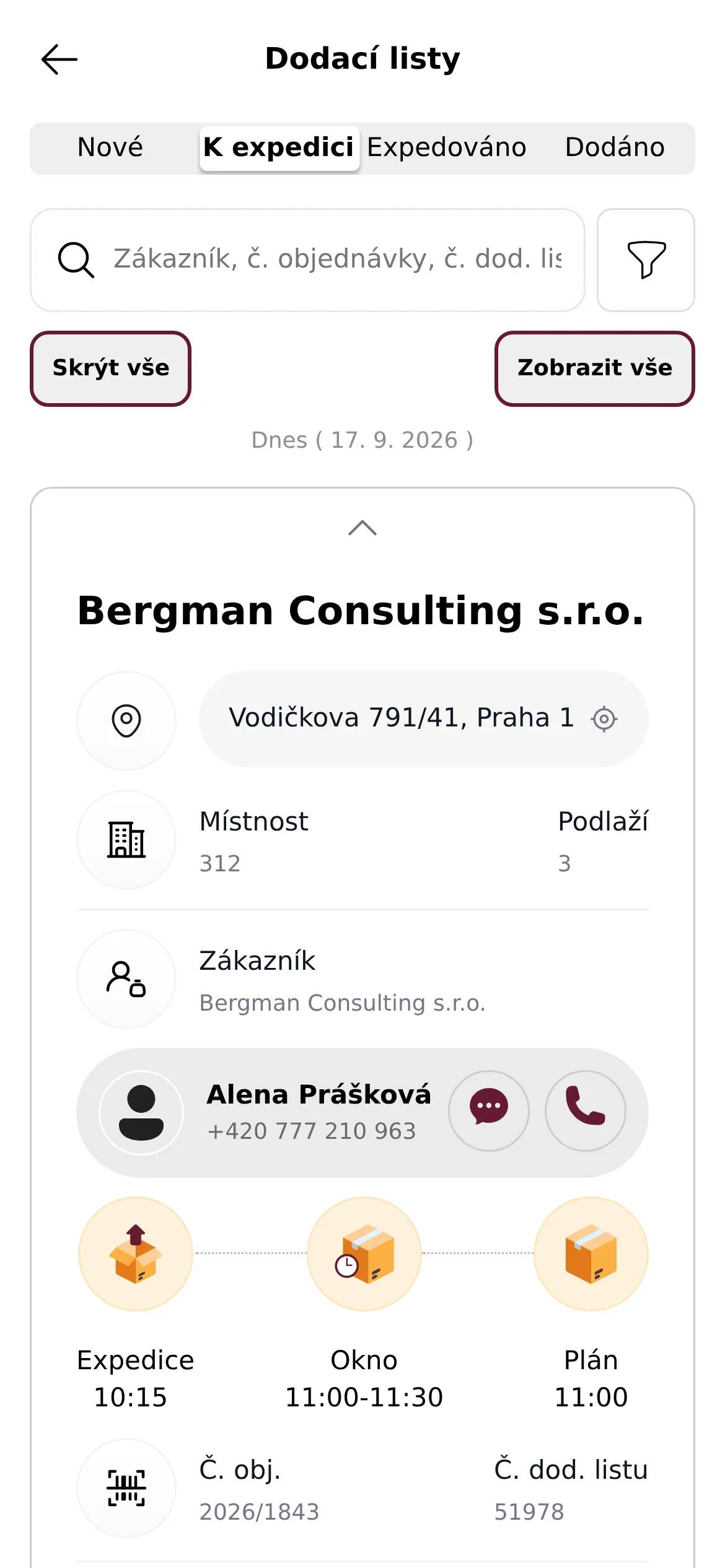
A delivery note that knows everything
The address down to the room and floor, the recipient’s contact and a timeline from dispatch through the delivery window to the plan. Calling takes one tap, and the SMS goes out with a prefilled message that the order is on its way.
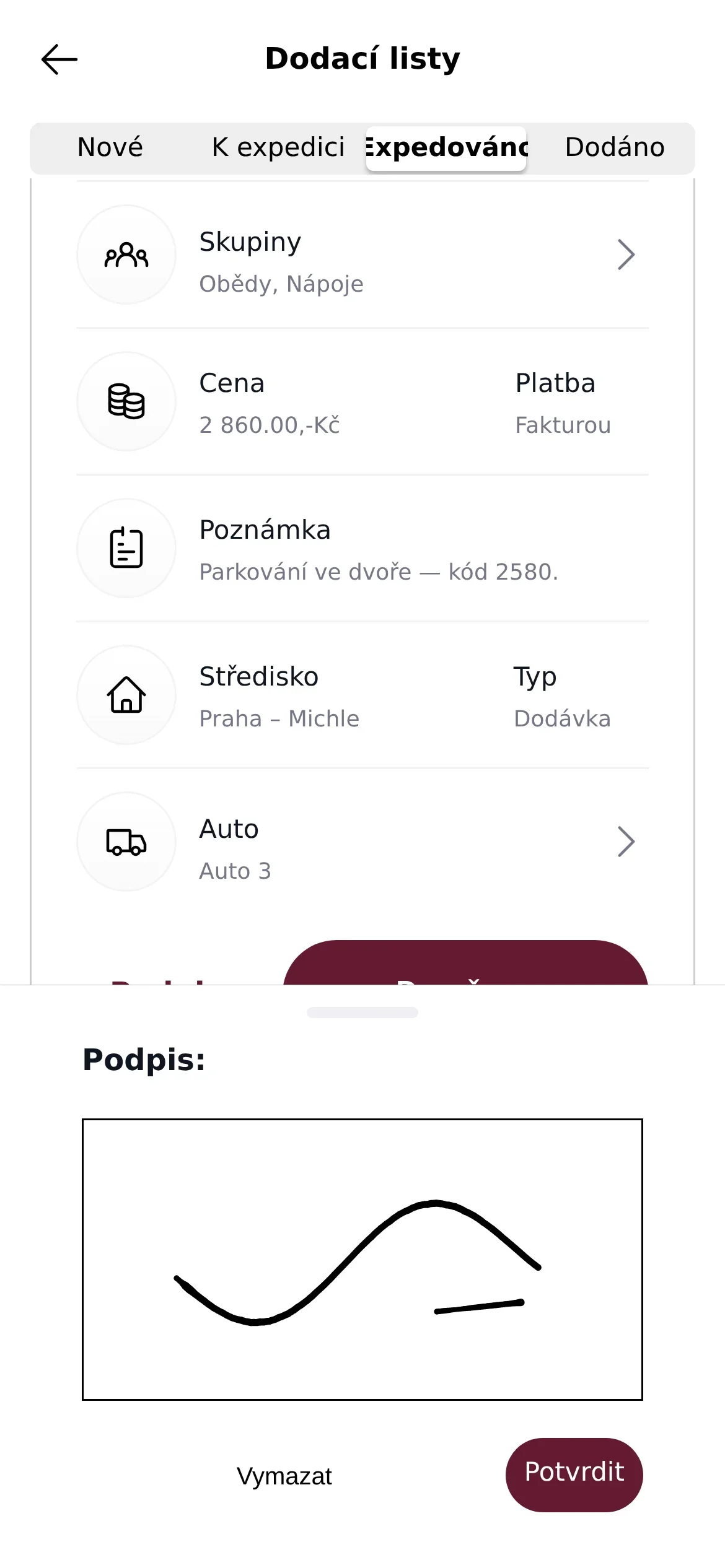
A finger-drawn signature instead of paper
At handover the customer signs the receipt right on the display. The signature is stored with the delivery note together with the GPS position of the handover, so what, where and when was handed over is on record.
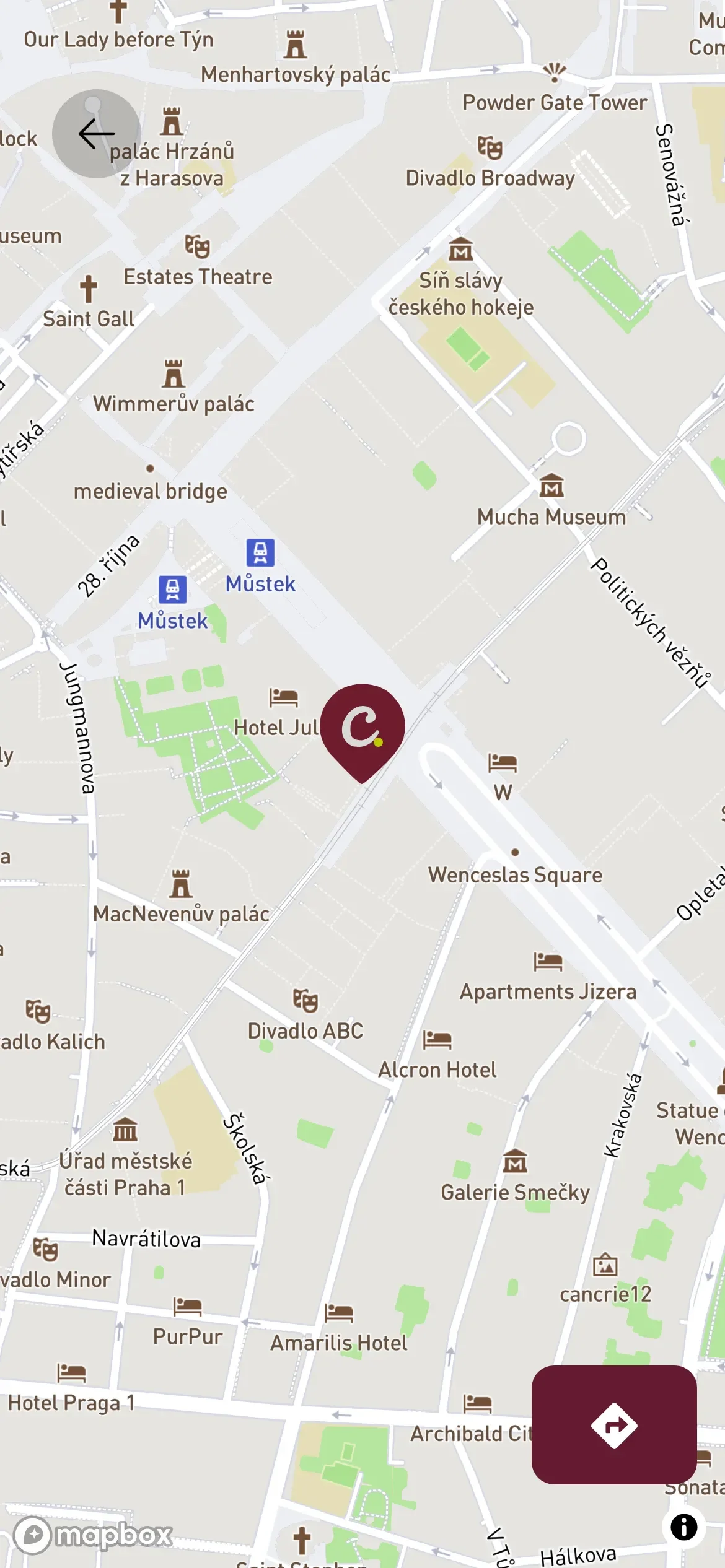
Navigation to the handover point
Every delivery note carries parking GPS coordinates: not the registered address, but the spot where a van can actually stop. From there, one tap opens navigation in Google Maps or Waze.
Dispatch sees the whole fleet
The other half of the app belongs to dispatch: a live map of the vans with GPS trackers, each vehicle’s telemetry and a logbook with the route on a map. Who is where, what they carry and what awaits them, without a single phone call.
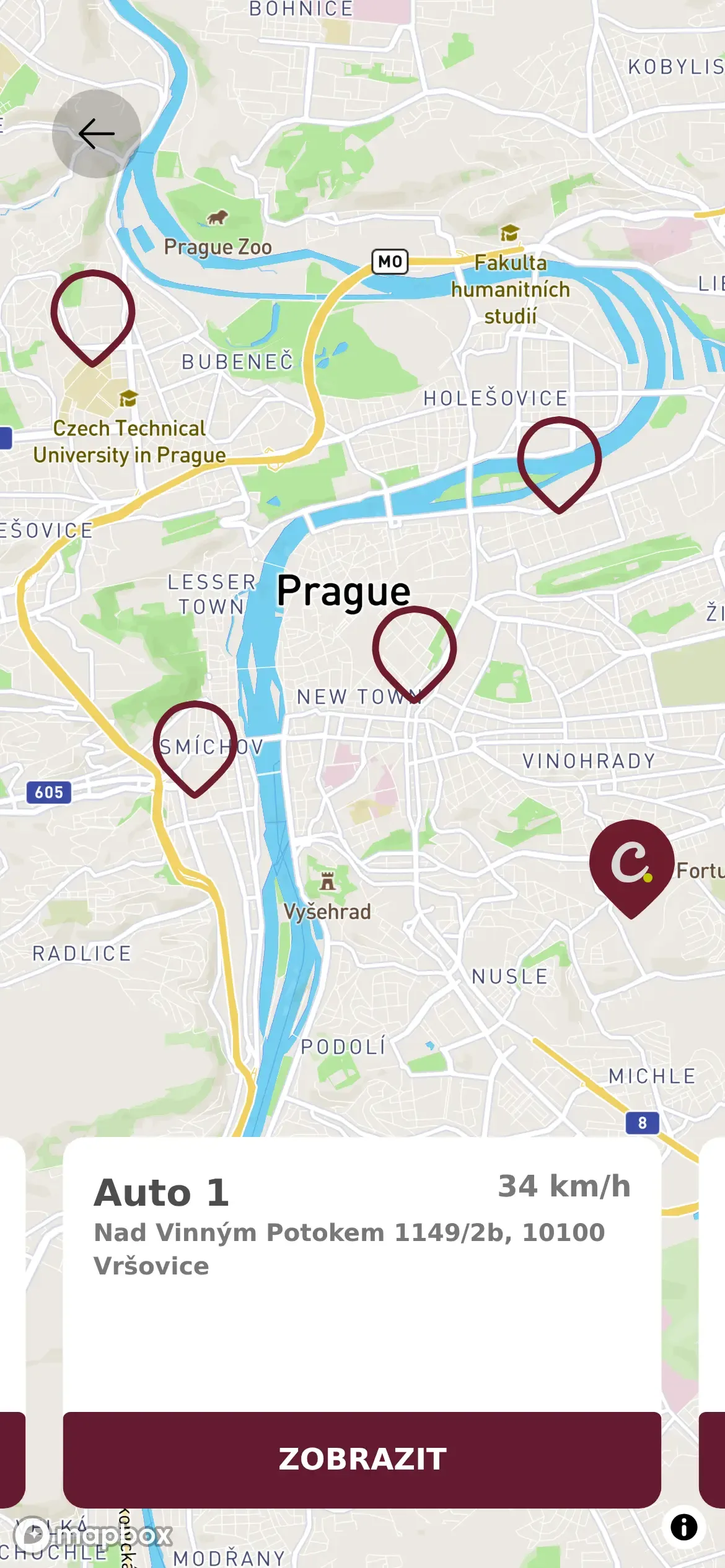
The fleet, live on a map
Vans with GPS trackers are drawn on the map in real time. The vehicle card shows the speed and current address; positions stream into the app continuously over Mercure, no refreshing.
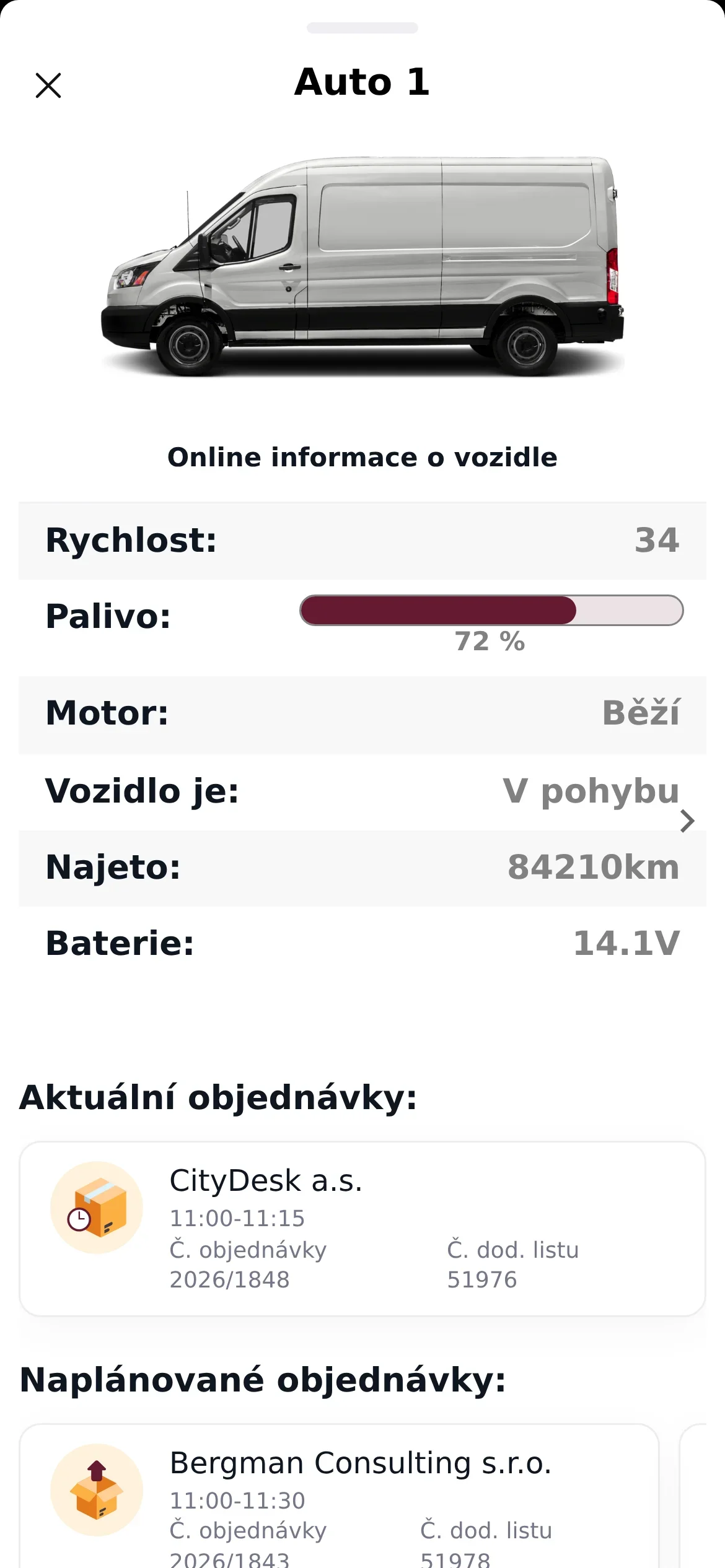
Telemetry of every van
Speed, fuel, engine, battery and mileage from the REX GPS units. And right below, what the van is carrying and which orders await it, so dispatch plans over the real state, not a guess.
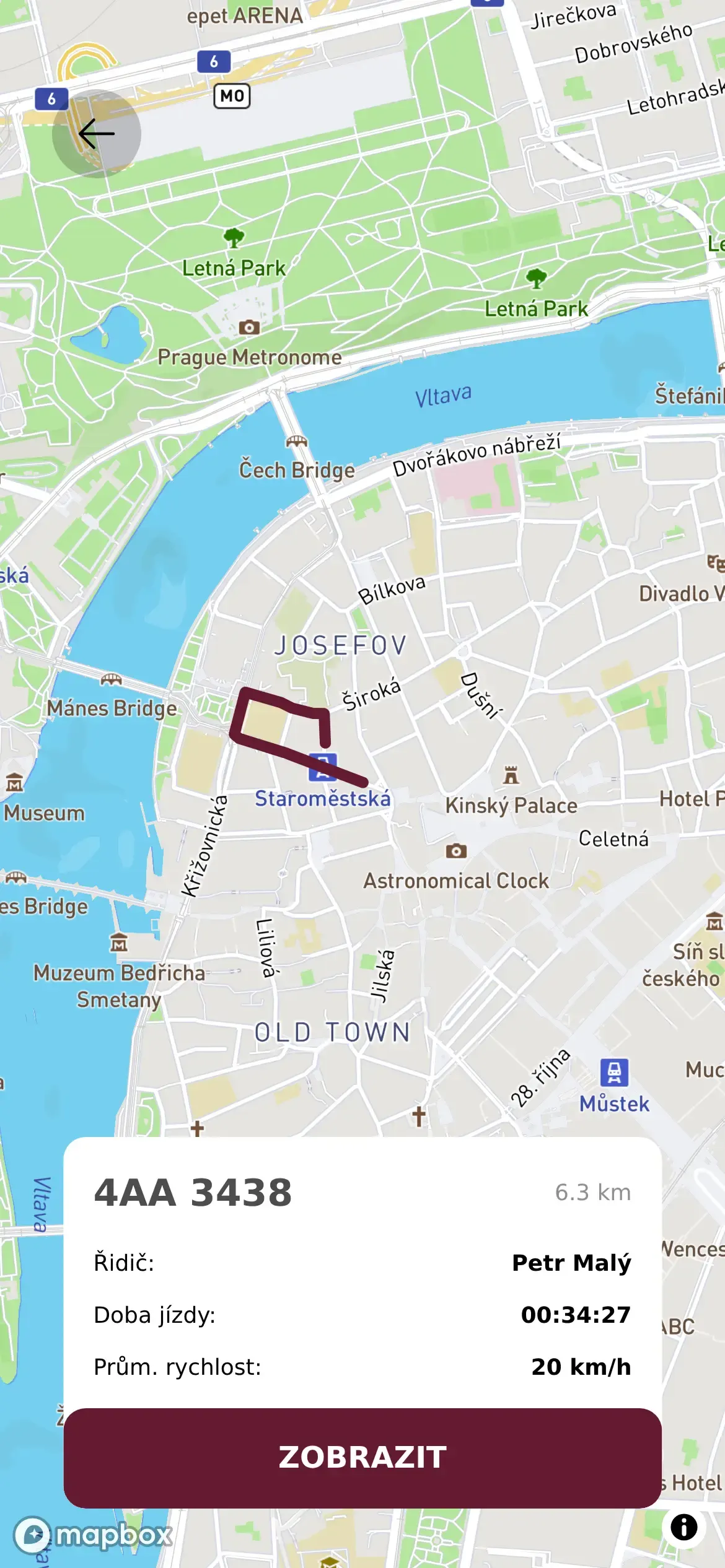
A logbook that writes itself
Every trip records itself: the route on a map, the trip time and the average speed, with filters by vehicle and branch. The logbook is written by the driving itself, not by retyping at the end of the month.
What else the app does
Delivery and dispatch in one app make for a longer list. The most interesting of it, at speed.
-
States like a production line
An order passes through the states New, To dispatch, Dispatched and Delivered. The production and delivery roles each see their own steps, so the kitchen prepares, the driver delivers and nobody steps on anyone’s work.
-
Connected to the company system
Orders flow into the phone from the Ordermat company system the business lives in. Nothing is entered twice: what holds in the system holds in the van, and the confirmed delivery returns back.
-
Items by group
Lunches, banquets, drinks: the items of a delivery are grouped with piece counts, so a large banquet order is checked in tidy blocks, not down the rows of an endless list.
-
The recipient one tap away
Every delivery note carries the recipient’s name and phone. A call starts right from the app, and the SMS goes out with a prefilled message that the order is approaching.
-
Search and filters
Full-text search across customers, order numbers and delivery note numbers, plus filters by vehicle and branch. Even on a day full of deliveries, a specific order turns up in seconds.
-
One codebase, two stores
The app is built on Capacitor with Vue 3 and Framework7, so one codebase serves both iOS and Android. Behind it run Symfony and API Platform on FrankenPHP in Docker, sign-in is secured with JWT, and Mapbox handles the maps and geocoding.
The app in one place
Twelve screens in pairs, in the order they come: from signing in through delivery notes and handover to the fleet map. The customers, names and amounts in the captures are sample data from a demo environment.
Deliveries signed with a finger.
Live site: catermat.com